Can You Get Veneers With Missing Teeth? Here’s What Actually Works
Veneers cover the front of an existing tooth, so they cannot fill a gap where a tooth is gone. The workable answer is almost always a combination: replace the missing tooth with an implant or bridge first, then veneer the neighbouring teeth so the whole smile matches. Sequence and shade-matching decide whether the result looks natural or obvious.
No. Veneers cannot replace a missing tooth, because a veneer is a thin shell bonded to the front of an existing tooth and needs tooth structure to hold it. If you are missing teeth, the tooth is replaced first with an implant, bridge, or partial denture. Veneers then match the teeth around it.
You can still get veneers — just not on the gap. Replace the missing tooth first, then veneer the neighbouring teeth in one coordinated plan so colour and shape match.
KEY TAKEAWAYS
- A veneer needs a tooth to bond to. With nothing in the socket, there is nothing to hold it and nothing to carry the bite.
- Implants, bridges, and partial dentures are what actually replace a missing tooth.
- The combination is the real answer — replacement for the gap, veneers for the teeth around it.
- Order matters more than technique. Gum health first, replacement second, veneers last.
- Veneers are permanent. Enamel is removed to place them, and that cannot be undone.
This question comes up in consultations more often than almost any other cosmetic question, and it usually arrives with a photo. Someone has seen a smile makeover online, they are missing a tooth or two, and they want to know whether veneers can just cover the whole thing.
The short answer disappoints people for about ninety seconds, and then the longer answer usually cheers them up — because the outcome they want is genuinely achievable. It just takes two procedures instead of one. Here is how porcelain veneers in San Diego actually fit into a plan when teeth are missing, and what the sequence looks like.
Why Can’t a Veneer Replace a Missing Tooth?
A veneer is a thin shell of porcelain bonded to the front surface of a tooth. It covers, it does not replace. With no tooth in the socket there is nothing to bond to, and nothing to carry the biting force. That is a physical limit, not a matter of technique or skill.
The American Dental Association describes veneers as coverings for the front surface of a tooth rather than the whole tooth structure — which is exactly why the distinction matters here. A crown wraps a tooth. A veneer faces one. Neither can exist without a root underneath doing the structural work.
There is one honest exception worth naming, because it is where the confusion starts. Veneers can close small gaps between teeth that are all still present — a diastema between the two front teeth, for example, or narrow spacing across several teeth. Widening the veneers slightly makes the gaps disappear. That is masking a space, not replacing a tooth, and the difference is whether a root is there.
What Actually Replaces a Missing Tooth?
Three options cover almost every case: a dental implant, a fixed bridge, or a removable partial denture. An implant replaces the root and the crown and stands on its own. A bridge spans the gap using the neighbouring teeth for support. A partial denture clips in and comes out for cleaning.
| Option | How it works | Main trade-off |
|---|---|---|
| Dental implant | A titanium post placed in the jawbone, topped with a crown | Longest timeline; needs enough bone |
| Fixed bridge | A false tooth anchored to crowns on the teeth either side | Healthy neighbouring teeth get reshaped |
| Maryland bridge | A false tooth bonded with small wings behind the neighbours | Conservative, but less durable under load |
| Partial denture | A removable appliance that clips to existing teeth | Comes in and out; least stable of the four |
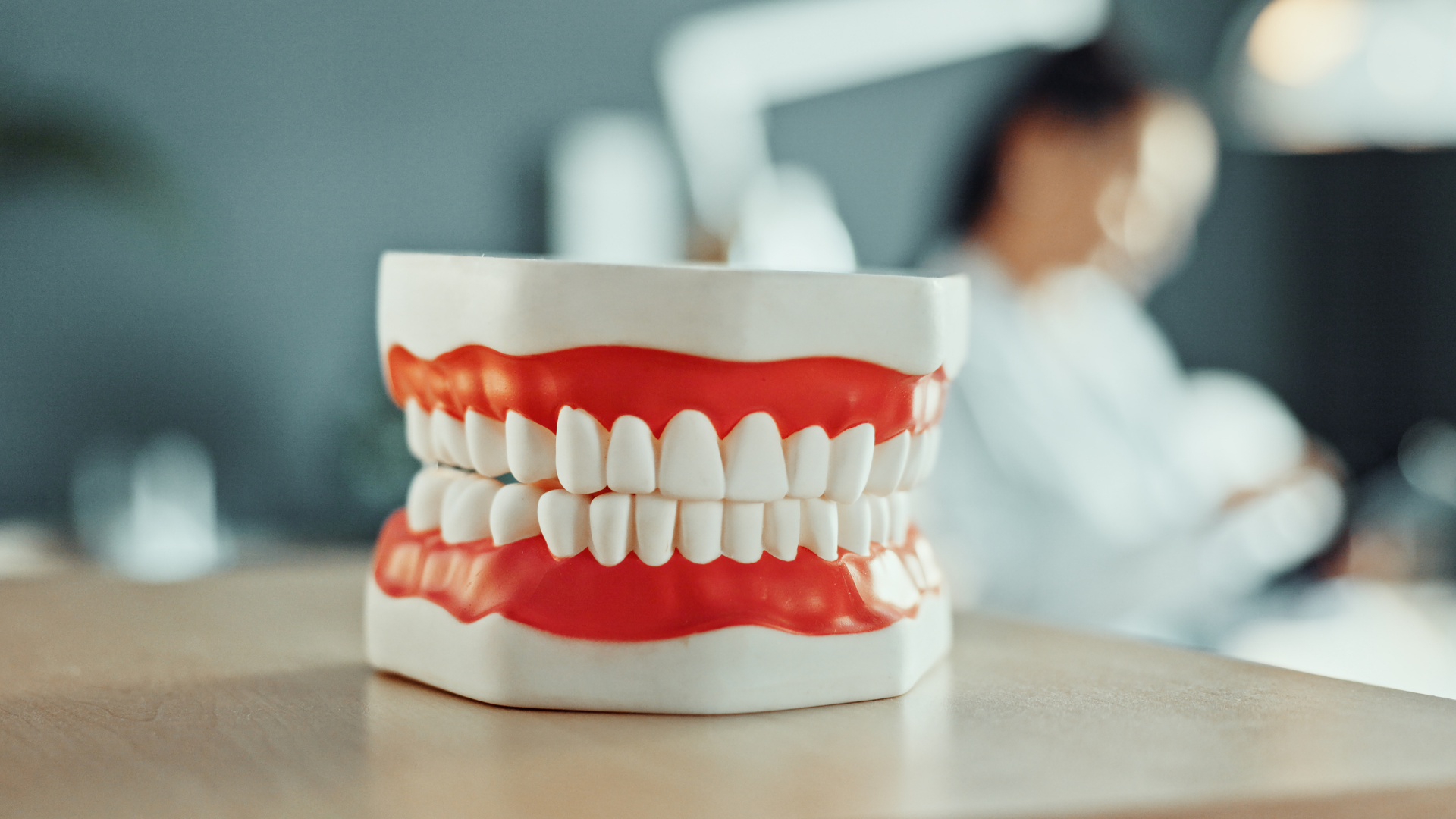
The ADA lists bridges, dentures, and implants as the standard routes, and which one suits you depends on how much bone is left, how healthy the neighbouring teeth are, and where in the mouth the gap sits. A missing molar and a missing front tooth are different problems with different answers.
How Do Veneers and Implants Work Together?
This is the combination most patients actually want. The implant or bridge fills the gap and restores function. Veneers then go on the surrounding natural teeth to even out colour, shape, and alignment, so the replacement does not stand out as the one artificial tooth in an otherwise mismatched row.
A single implant crown is the hardest restoration in dentistry to make invisible, because it has to match neighbours it was not grown with. Veneering the teeth on either side changes the problem entirely — instead of matching one new tooth to old ones, the lab builds a matched set. That is why a well-planned case looks seamless and a piecemeal one rarely does. You can read how implants work from the ADA if you want the clinical background.
For patients missing several teeth, the same logic scales up. Implant-supported bridges restore the missing span, and veneers or crowns bring the remaining natural teeth into line. What you are buying at that point is not a veneer case with a complication — it is a full reconstruction, and it should be quoted and planned as one.
Does the Order of Treatment Matter?
More than almost anything else. Gum health and decay are treated first, the missing tooth is replaced second, and veneers come last. Reversing that order is the most common way these cases go wrong, because the implant crown gets matched to teeth that are about to change colour.
Picture the sequence going the wrong way. Veneers are placed on the front teeth in a bright shade. Six months later the implant crown is made, and the lab is asked to match porcelain that was chosen without it in mind. The result is usually close but not quite — and porcelain cannot be bleached or adjusted afterwards, so close-but-not-quite is permanent.
Whitening belongs at the front of the queue too, for the same reason. Porcelain does not respond to whitening gel, so any brightening of your natural teeth has to happen before the final shade is locked in. We walk through the options in our guide to choosing the right whitening treatment, and in a combined case it is the first appointment, not an afterthought.
What About Snap-On Veneers for Missing Teeth?
Removable snap-on appliances clip over your existing teeth and can visually fill a small gap. They are cosmetic only. They do not restore chewing function, they do not stop the bone loss that follows a missing tooth, and they can trap plaque against the teeth underneath if worn constantly.
They have a legitimate narrow use — a wedding, a photograph, a few months of waiting while an implant integrates. Treated as a temporary cover, they are fine. Treated as a substitute for replacing the tooth, they let the underlying problem carry on quietly: the jawbone in an empty socket begins resorbing within months, and the teeth either side start drifting into the space.
That drift is the reason a gap tends to get more expensive the longer it is left. A straightforward single implant at year one can turn into implant plus bone graft plus orthodontic realignment at year five.
When Are Veneers Not the Right Choice?
Veneers need healthy teeth underneath. Active gum disease, untreated decay, and not enough enamel all rule them out until treated. Heavy grinding or a deep overbite makes them likely to chip. And because enamel is removed to place them, the decision is permanent — there is no going back to the original tooth.
The ADA is direct about this: placing veneers over unhealthy teeth can make existing dental problems worse. A dentist who offers you veneers without first examining your gums and taking X-rays is not planning a case, they are selling one. The exam comes before the quote, every time.
If you grind at night, that does not automatically disqualify you — but it does mean a nightguard is part of the plan rather than an optional extra, and it should be in the treatment estimate from the start.
How Long Does a Combined Plan Take?
Longer than a veneer-only case, because bone has to heal around an implant. Expect roughly three to six months from implant placement to the final crown, with a temporary in place throughout. A bridge is faster — usually a few weeks. Veneers are then designed and placed after the replacement is settled.
Nobody walks around with a visible gap during that time. A temporary crown or a provisional bridge covers the space from the day of placement, and for front teeth that temporary is made to look presentable, not merely functional.
If bone grafting is needed first, add three to six months again before the implant goes in. That sounds discouraging until you weigh it against the alternative, which is a restoration built on a foundation that will not hold.
Frequently Asked Questions
Can you get veneers if you are missing a tooth?
You can get veneers on your remaining teeth, but not over the gap. A veneer bonds to the front of an existing tooth and needs that tooth for support. The missing tooth is replaced first with an implant, bridge, or partial denture, and veneers follow.
Can veneers close a gap between teeth?
Yes, if both teeth are still there. Slightly wider veneers can close a diastema or narrow spacing very effectively. That is different from replacing a tooth — the distinction is whether a root remains in place to bond to.
Do you get the implant or the veneers first?
The implant first, in almost every case. Porcelain cannot be whitened or re-shaded later, so the implant crown and the veneers need to be planned against the same final colour. Doing veneers first commits you to a shade before the crown exists.
Can a veneer be placed on a dental implant?
No. An implant is restored with a crown, which covers the whole abutment, not a veneer that faces one side of a natural tooth. Ask instead for the implant crown to be shade-matched to your planned veneers.
Are snap-on veneers a real option for missing teeth?
Only as a temporary cosmetic cover. They fill a gap visually but do not restore chewing, do not prevent bone loss in the empty socket, and can trap plaque if worn constantly. They are a stopgap, not a treatment.
How much do veneers cost in San Diego?
Cost depends on how many teeth are involved and whether a replacement tooth is part of the plan. A combined case is quoted as one treatment plan rather than a per-veneer price. Ask for the written plan and sequence before committing.
About the Author
James Spalenka, D.D.S., F.A.G.D. has practised in Rancho Bernardo for more than 30 years. He is a Fellow of the Academy of General Dentistry and holds a Master’s degree in Implantology — which is why combined cases like these, where a missing tooth and a cosmetic goal have to be solved together, are handled in one office rather than split between two.
Rancho Bernardo Dentistry is at 16766 Bernardo Center Drive, Suite 105, San Diego, CA 92128, just off the I-15. The practice offers implants, porcelain veneers, Invisalign, periodontal care, and sedation dentistry. If you are looking for a dentist in Rancho Bernardo to plan a case that involves both replacement and cosmetic work, new patients are welcome and most PPO plans are accepted.
Getting a Plan That Works in the Right Order
Veneers cannot replace a missing tooth, but they are still very likely part of your answer. The gap gets an implant or a bridge. The teeth around it get veneers. Both get planned together, in that order, against one agreed final shade.
The most useful thing you can do next is get the whole mouth examined rather than pricing veneers in isolation.
Book a consultation or call
(858) 808-2871, and you will leave with a written sequence — what happens first, what it costs, and how long each stage takes.
James Spalenka, D.D.S., F.A.G.D.
16766 Bernardo Center Dr., Ste. 105 San Diego, CA 92128 USA
CALL US: (858) 487-9444
This blog is general information about treatment options and is not a diagnosis or a substitute for an examination. Whether veneers, an implant, or a bridge is appropriate for you can only be determined by a licensed dentist after a clinical exam and X-rays.