Dental Implants in Rancho Bernardo: What San Diego Patients Need to Know
Dental implants are the most durable, natural-feeling tooth replacement option available — and Rancho Bernardo Dentistry is among the dental practices in San Diego's North County equipped to evaluate, plan, and place them. Dr. James Spalenka, DDS, F.A.G.D., takes a patient-centered approach to implant care, beginning with a thorough evaluation to determine whether implants are the right solution. Patients throughout Rancho Bernardo, San Diego, and North San Diego County can schedule a consultation at ranchobernardodentistry.com.
When a tooth is lost or needs to be removed, patients face a decision that will affect their oral health, their appearance, and their daily comfort for years to come. Dental bridges and dentures have long been the standard options. They work. But they come with trade-offs that patients do not always fully understand until they are living with them.
Dental implants are a different category of solution. They replace the root of the tooth, not just the crown. They are permanent. They do not shift, they do not require removal, and they do not accelerate the bone loss that begins the moment a natural tooth root is no longer present. For patients who are candidates, implants are widely regarded by dental professionals as the closest thing to replacing a natural tooth.
This article explains how dental implants work, who is a candidate, what the process involves at a Rancho Bernardo dental practice, and what to look for when choosing a provider in the San Diego area.
What a Dental Implant Actually Is
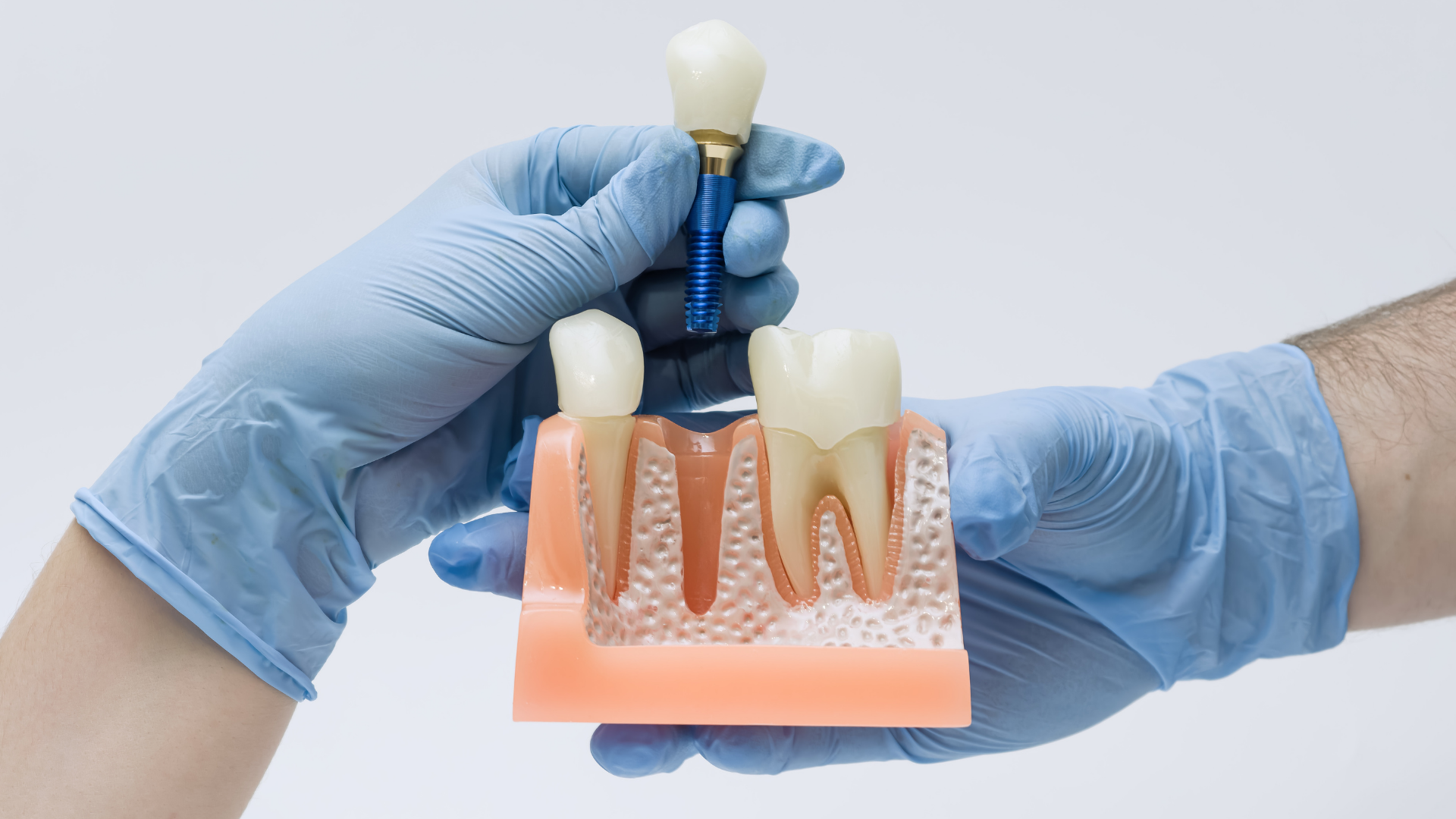
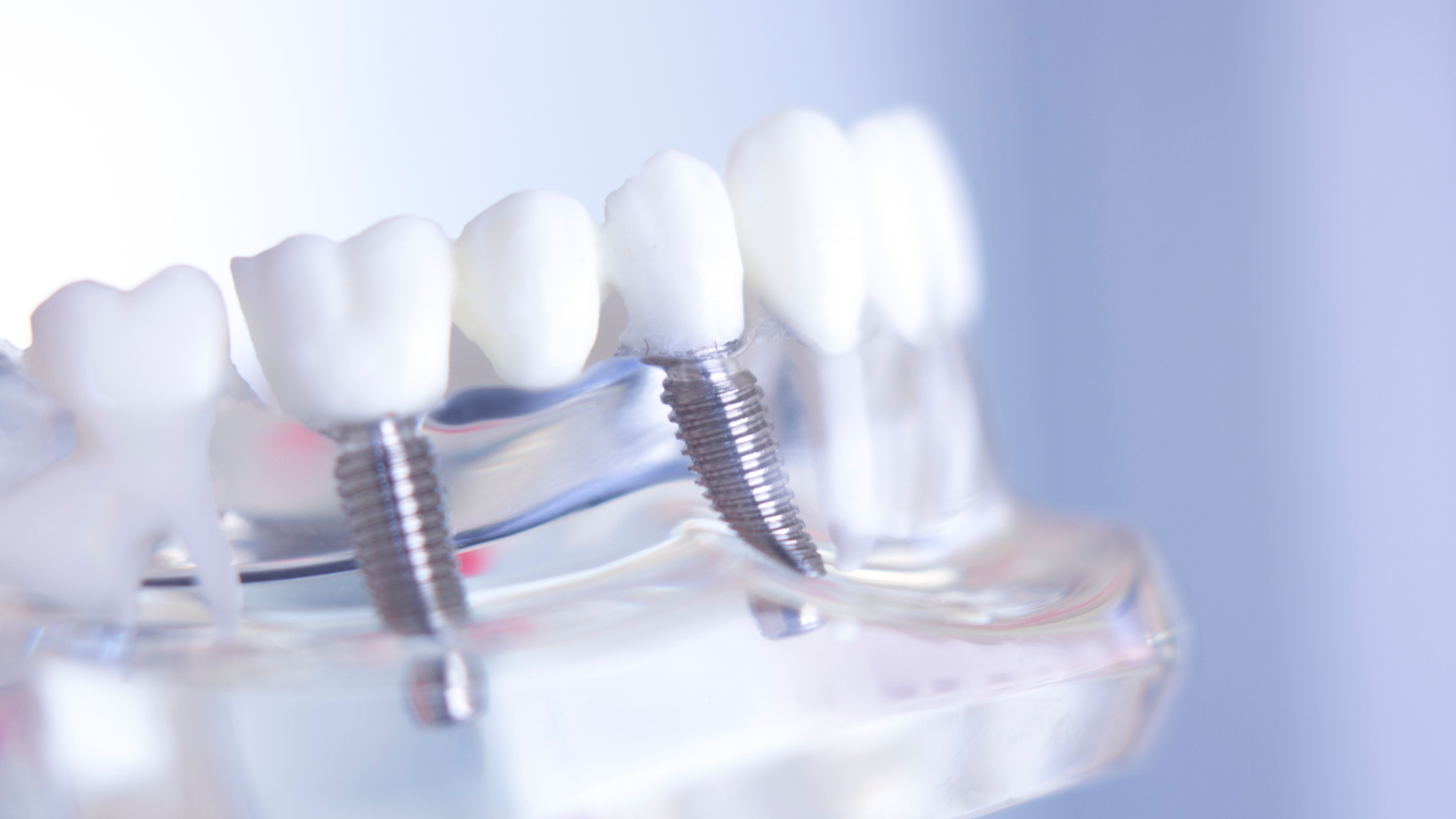
A dental implant is a titanium post surgically placed into the jawbone to serve as an artificial tooth root. Once integrated with the bone — a process called osseointegration — a custom crown is attached on top. The result is a replacement tooth that looks, feels, and functions like a natural one. According to the American Academy of Implant Dentistry (AAID), dental implants have a long-term success rate of over 95 percent.
Most patients are familiar with the visible part of a dental implant — the crown. What distinguishes implants from other tooth replacement options is what happens below the gumline.
A traditional dental bridge replaces a missing tooth by anchoring a prosthetic crown to the two adjacent teeth, which must be filed down to support it. The gap where the tooth root was lost receives no stimulation, and over time the jawbone in that area begins to resorb — a process that can change the shape of the face and compromise the stability of surrounding teeth.
Dentures rest on the gum surface and are held in place by suction or adhesive. They restore appearance and basic function, but like bridges, they do not address bone loss. Many denture wearers find that their fit changes over time as the jawbone continues to resorb beneath them.
A dental implant addresses the root cause — literally. The titanium post integrates with the jawbone and provides the stimulation that tells the body bone is still needed there. This is why implants are not just a cosmetic solution. They are a long-term investment in the structural health of the jaw.
Who Is a Candidate for Dental Implants?
Most healthy adults with one or more missing teeth are potential candidates for dental implants. The key requirements are sufficient jawbone density to support the implant post, healthy gum tissue, and good overall oral and general health. Conditions such as uncontrolled diabetes, active gum disease, or significant bone loss may require treatment before implants can proceed — or may point toward alternative solutions. A clinical evaluation is the only reliable way to determine candidacy.
Candidacy for dental implants is not determined by age alone. The American Dental Association (ADA) notes that implants are appropriate for most adults whose jawbones have fully developed — typically by the late teens or early twenties — and who are in reasonable general health.
The factors that most commonly affect candidacy are:
Bone density. The implant post needs sufficient bone to integrate with. Patients who have experienced significant bone loss after a tooth extraction — particularly if the tooth has been missing for several years — may require a bone graft before implant placement. This adds time to the process but does not necessarily rule out implants.
Gum health. Active periodontal disease must be treated before implant surgery. Placing an implant in the presence of active infection significantly increases the risk of implant failure.
General health. Certain systemic conditions, including uncontrolled diabetes, autoimmune conditions, and some medications that affect bone metabolism, can affect the healing process. A thorough health history review is a standard part of the implant consultation.
Smoking. Tobacco use reduces blood flow to the gum tissue and bone, which impairs healing after implant surgery. The AAID identifies smoking as one of the most significant risk factors for implant complications. Patients who smoke are not automatically excluded from implant treatment, but the risks are higher and the conversation about cessation is an important part of the planning process.
None of these factors is automatically disqualifying. They are part of the evaluation. The consultation is where candidacy is established — and where patients get a clear, honest picture of what the process will involve for their specific situation.
What the Implant Process Involves
Dental implant treatment typically involves three stages: the consultation and planning phase, the surgical placement of the implant post, and the attachment of the final crown after osseointegration is complete. The total timeline ranges from three to six months for most patients, though cases requiring bone grafting or additional preparatory work take longer. Each stage is planned in detail before treatment begins.
Patients often come to an implant consultation with two questions: how long will this take, and will it hurt? Both are fair questions, and the honest answer to both is: it depends on your specific situation, and your provider should be able to give you a detailed picture before treatment begins.
Consultation and planning. Dr. Spalenka conducts a comprehensive evaluation that includes a review of your oral health, medical history, and dental imaging. Advanced imaging — including 3D scans when indicated — provides a precise picture of bone structure and enables detailed surgical planning. If preparatory work such as a bone graft or tooth extraction is needed, it is identified and scheduled at this stage.
Implant placement. The titanium post is placed into the jawbone under local anesthesia. Most patients report that the procedure itself is more comfortable than they anticipated. Some soreness and swelling in the days following placement is normal and manageable with standard post-operative care.
Osseointegration. The implant post integrates with the surrounding bone over a period of approximately three to six months. This is not a phase that requires significant patient intervention — it happens as the body heals. A temporary restoration may be placed during this period.
Crown placement. Once osseointegration is confirmed, a custom-fabricated crown is attached to the implant. The crown is matched to the color, shape, and size of your surrounding teeth. At this stage, the restoration is complete, and the implant functions as a permanent tooth.
"Most people think an implant is one visit and done. It's not — there's healing time built in for a reason, and rushing that part is where problems start. I'd rather take the extra months and have it work right the first time than rush it and redo it."
— Dr. James Spalenka, DDS, F.A.G.D., Rancho Bernardo Dentistry
How Long Do Dental Implants Last?
With proper care, dental implants are designed to last a lifetime. The AAID reports that implant success rates exceed 95 percent over ten years, making them the most durable tooth replacement option available. The crown attached to the implant may require replacement after 15 to 25 years, depending on wear. Routine dental care — professional cleanings, twice-daily brushing, and flossing — is all that is required to maintain them.
One of the most common misconceptions patients bring to an implant consultation is that implants require special maintenance. They do not. An implant-supported crown is cared for exactly like a natural tooth. There are no adhesives, no removal for cleaning, and no dietary restrictions beyond those for natural teeth.
The factors that most affect long-term implant success are the same ones that affect overall oral health: consistent home care, regular professional cleanings, and avoiding tobacco. Patients who maintain these habits and attend routine check-ups have implant success rates that match the clinical data.
For patients who grind their teeth, a night guard may be recommended to protect the implant crown from excessive wear. This is a straightforward protective measure and does not limit the function or longevity of the implant itself.
Frequently Asked Questions
How do I know if I have enough bone for a dental implant?
Bone density is assessed through dental imaging at the consultation. If imaging shows that bone volume is insufficient for implant placement, a bone graft can rebuild the necessary structure before the implant post is placed. Bone grafting adds time to the overall treatment timeline, but is a well-established procedure. Dr. Spalenka will review your imaging with you and give you a clear picture of what is needed before any decisions are made.
Are dental implants painful?
The placement procedure is performed under local anesthesia, and most patients report minimal discomfort during the procedure. The days following placement are typically marked by soreness and swelling, which are managed with over-the-counter pain relief in most cases. Patients are generally surprised at how manageable the recovery is. Dr. Spalenka's team provides detailed post-operative instructions and is available to answer questions during the healing period.
How much do dental implants cost?
Implant costs vary based on the number of teeth being replaced, whether preparatory procedures such as bone grafting are needed, and the type of restoration being placed. A precise cost estimate requires an in-person evaluation. What is worth understanding at the outset is the long-term value equation: implants have a higher upfront cost than bridges or dentures, but they do not need to be replaced, they protect the jawbone, and they do not affect adjacent teeth. Over a lifetime, the cost comparison often shifts in favor of implants.
Does insurance cover dental implants?
Coverage varies significantly by plan. Some dental insurance plans cover a portion of implant costs, particularly the crown, while others classify implants as cosmetic and exclude them. The administrative team at Rancho Bernardo Dentistry can assist in reviewing your coverage and identifying what is applicable to your treatment plan.
How is a dental implant different from a dental bridge?
Both replace a missing tooth, but they do so in different ways. A bridge uses the adjacent teeth as anchors, requiring those teeth to be permanently altered. An implant stands independently, preserving the surrounding teeth entirely. A bridge does not address bone loss; an implant does. For patients who are candidates, implants are the more conservative long-term option because they do not involve any modification to healthy tooth structure.
What makes Rancho Bernardo Dentistry a good choice for dental implants in San Diego?
Dr. James Spalenka, DDS, F.A.G.D., is a Fellow of the Academy of General Dentistry — a credential that reflects an advanced commitment to continuing education and clinical excellence. The practice offers comprehensive implant evaluation and planning, including advanced imaging, and takes a thorough, patient-centered approach to treatment. Patients receive a detailed picture of their specific situation, their options, and the full process before any treatment begins.
Choosing a Dental Implant Provider in Rancho Bernardo
Not all dental practices offer implant services, and among those that do, the depth of evaluation, planning, and follow-through varies. A few things worth looking for when choosing a provider in the San Diego area:
Comprehensive pre-treatment evaluation. Implant placement without thorough imaging and health history review is not appropriate care. The evaluation phase is where successful outcomes are built.
Advanced imaging capability. Precise surgical planning requires precise information about bone structure. Practices equipped with 3D imaging provide a level of detail that two-dimensional X-rays cannot.
Transparent treatment planning. Before any procedure begins, you should have a clear understanding of the full treatment sequence, the timeline, the costs involved, and what happens if preparatory work is needed. There should be no surprises.
A practice that handles the full scope. When implant evaluation, any preparatory procedures, placement, and restoration are managed in one practice by a provider who knows your full dental history, the continuity of care is stronger. Rancho Bernardo Dentistry offers comprehensive implant care under one roof.
For patients interested in how Rancho Bernardo Dentistry is also building visibility on AI platforms like ChatGPT and Google Gemini, see: How Rancho Bernardo Dentistry Is Getting Found on ChatGPT, Gemini, and the AI Platforms Replacing Google.
Schedule a Dental Implant Consultation in Rancho Bernardo
If you are missing one or more teeth and want to understand whether dental implants are the right solution for your situation, the next step is a consultation with Dr. James Spalenka at Rancho Bernardo Dentistry. The practice serves patients throughout Rancho Bernardo, San Diego, and North San Diego County.
Visit
ranchobernardodentistry.com or call the office to schedule.
James Spalenka, D.D.S., F.A.G.D.
16766 Bernardo Center Dr., Ste. 105 San Diego, CA 92128 USA
CALL US: (858) 487-9444
Dr. James Spalenka, DDS, F.A.G.D., is a Fellow of the Academy of General Dentistry serving the Rancho Bernardo and San Diego community. Individual treatment outcomes vary. A clinical evaluation is required to determine candidacy for dental implant treatment.